Bücher versandkostenfrei*100 Tage Rückgaberecht***Abholung in über 100 Filialen
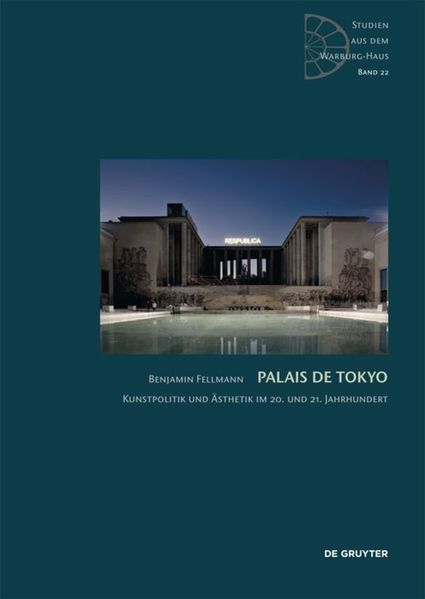
Palais de Tokyo. Art politics and aesthetics in the 20th and 21st century
Since the beginning of the 20th century, the monumental Palais de Tokyo in Paris has been a seismograph for the role of contemporary art in international perspectives and its public place in society. Today, as one of the largest art centers in Europe, it is one of the world's leading exhibition venues. Conceived in intellectual exchanges in the context of the League of Nations and planned as a state-of-the-art museum building in the »world capital of art«, the Palais de Tokyo was built on the occasion of the 1937 world's fair for both a museum of the state and one of the city.
This first comprehensive monograph shows how France's first state museum of modern art became a global center of contemporary art and art theory, drawing on a vast amount of source material. The Musée national d'Art moderne, the 1937 World Exposition, the occupation and post-war period, the genesis of the Centre Pompidou in response to the Palais de Tokyo, the experimental Musée d'Art et d'Essai, the Institut des Hautes Études en Arts Plastiques and ambitions for a national center of photography and film since the 1980s are some of the key elements of this history up to the emergence of the contemporary institution and theories of relational aesthetics and participatory art.
Das monumentale Palais de Tokyo in Paris, einst im internationalen Austausch zur Weltausstellung 1937 konzipiert als modernster Museumsbau, ist heute eines der größten Kunstzentren Europas. Diese erste umfassende Monographie zeigt, wie das erste staatliche Museum moderner Kunst Frankreichs zu einem globalen Zentrum der Gegenwartskunst und der zeitgenössischen Kunsttheorie wurde.
Besatzungs- und Nachkriegszeit, die Planung des Centre Pompidou, das experimentelle Musée d'Art et d'Essai, das Institut des Hautes Études en Arts Plastiques und Ambitionen für ein staatliches Zentrum für Foto und Film seit den 1980er Jahren sind nur einige Eckpunkte dieser Geschichte bis zur Entstehung des zeitgenössischen Ausstellungshauses und jüngsten Debatten um relationale Ästhetik und partizipative Kunst.
"Fellmann rend justice au sous-titre prommetteur. En focalisant son intérêt sur un choix d'expositions en lien avec l'histoire des idées, il retrace le développement du musée d'Art moderne." (Michael Rauch in Critique d'art 55, 2020)
Es wurden noch keine Bewertungen abgegeben. Schreiben Sie die erste Bewertung zu "Palais de Tokyo" und helfen Sie damit anderen bei der Kaufentscheidung.