Bücher versandkostenfrei*100 Tage Rückgaberecht***Abholung in über 100 Filialen
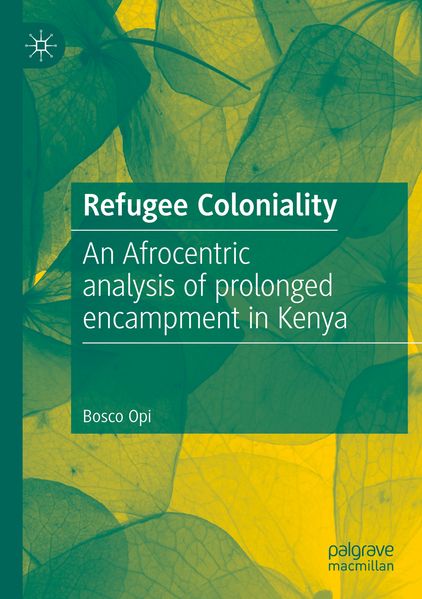
This book presents a decolonial and Afrocentric critique of prolonged encampment of refugees, centred on the case study of refugee camps in Kenya, introduced through the author's decades-long experience of forced displacement. His positionality as a former refugee contributes to a wider discussion on representation, voice, and power within the refugee studies literature. Likewise, the revisiting of the refugee camp as site and tool of power from a colonial perspective, is an important and timely contribution to the literature. This book examines the camp as a colonial innovation and the enduring colonial logics of supposedly 'humanitarian' extended encampment. Drawing on the anti-colonial theorists such as Fanon, Mbembe, and Nyerere, etc, it argues for an Africa without borders or encampment. The study is interdisciplinary, encompassing forced migration/refugee studies, camp studies, decolonial studies, and African studies. More broadly, it seeks to contribute to the literature on the politics of asylum in Africa through a critical examination of the colonial origins and the practice of encampment in Kenya.
Inhaltsverzeichnis
1. My refugee story. - 2. Decolonial theories of the camp. - 3. The colonial origins of encampment in Kenya. - 4. Critique of the UNHCR. - 5. The securitisation of African borders. - 6. A borderless Africa.
Es wurden noch keine Bewertungen abgegeben. Schreiben Sie die erste Bewertung zu "Refugee Coloniality" und helfen Sie damit anderen bei der Kaufentscheidung.