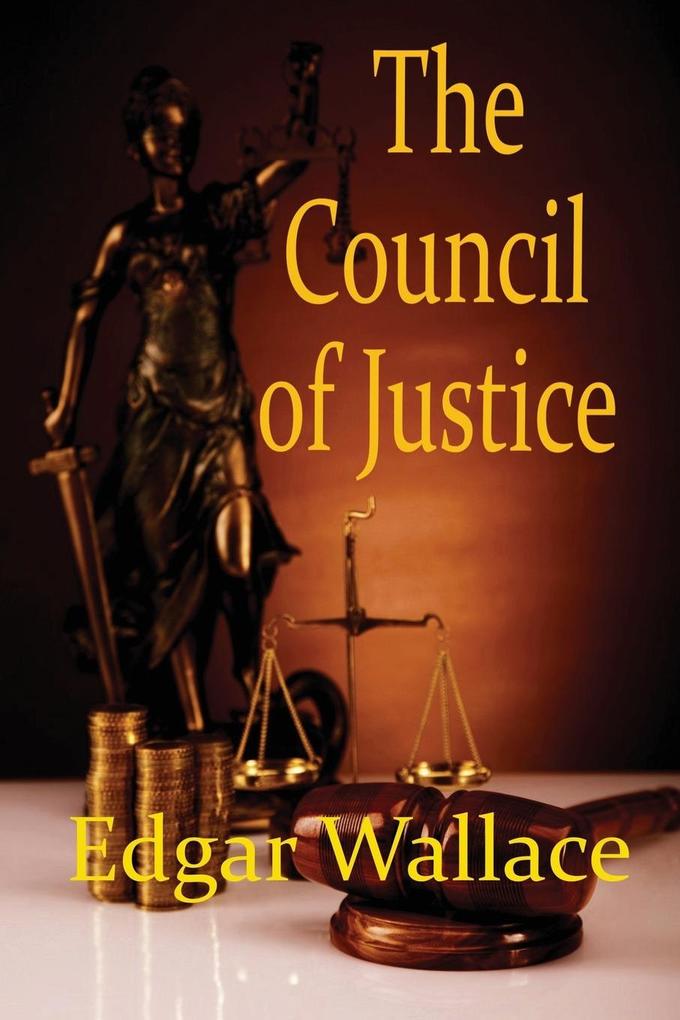
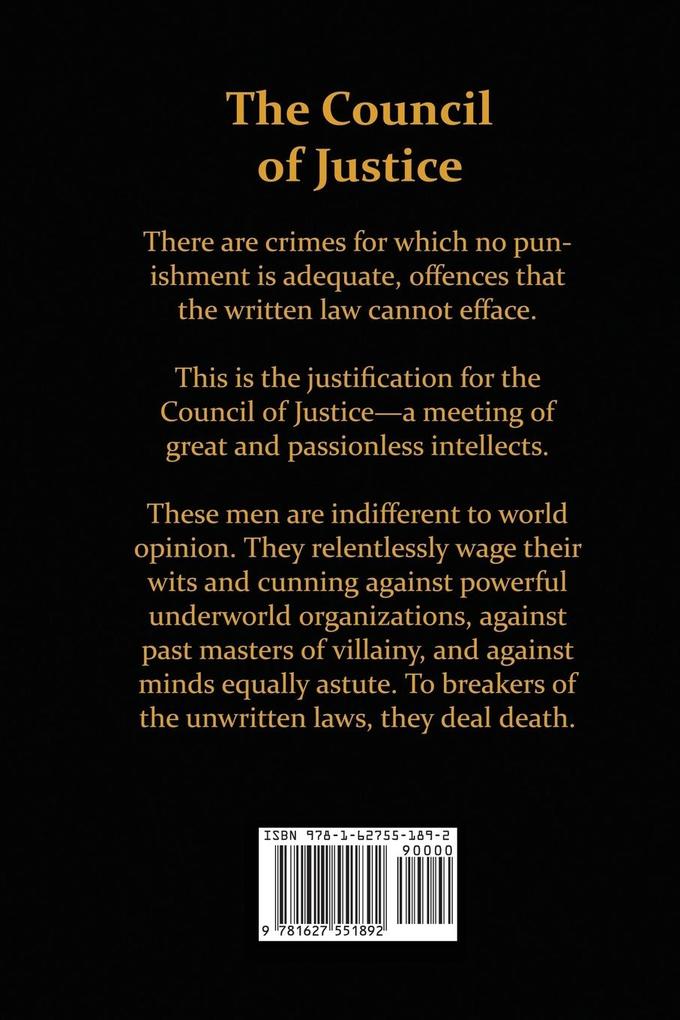
A swift and tightly structured crime novel in which justice operates outside the formal boundaries of the law. In The Council of Justice, Edgar Wallace continues his exploration of clandestine authority through a network of figures who impose order where official institutions prove inadequate. The narrative moves through a series of calculated interventions, where secrecy, judgment, and retribution intersect.
Wallace's approach is direct and economical, favouring momentum and clarity over elaboration. The story develops through rapid shifts in situation and perspective, maintaining tension through concealment and revelation rather than prolonged investigation. As the structure of authority becomes increasingly ambiguous, the distinction between justice and control is brought into question.
Part of Wallace's broader cycle of crime fiction centred on extralegal enforcement, this work reflects the author's ability to construct fast-paced narratives grounded in moral uncertainty. It remains a representative example of early twentieth-century British crime fiction, appealing to readers of procedural tension and organised intrigue.