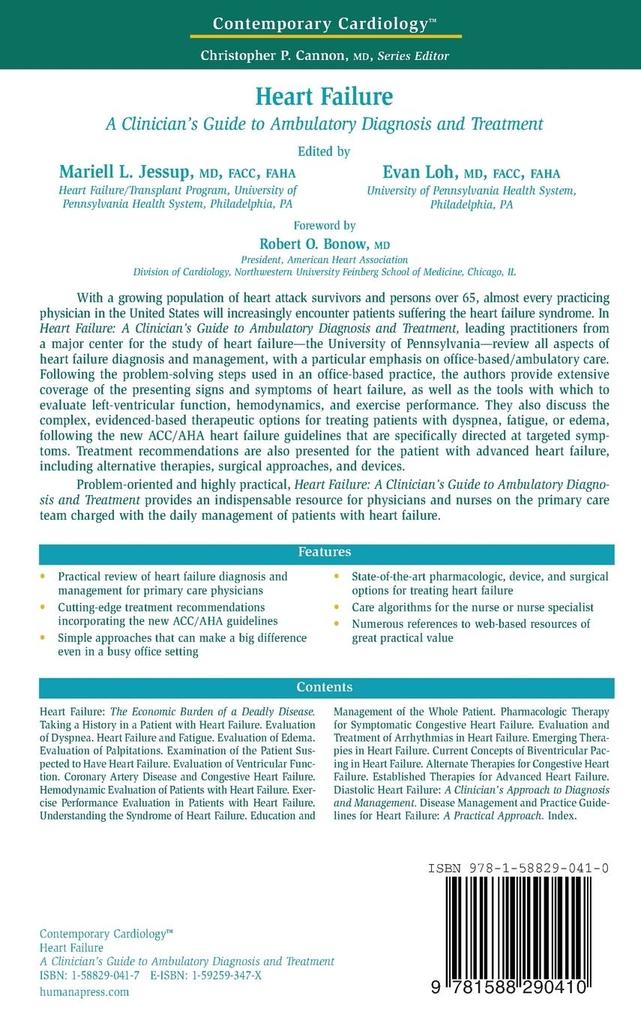
Leading practitioners from the University of Pennsylvania review all aspects of heart failure diagnosis and management, with a particular emphasis on office-based/ambulatory care. Following the problem-solving steps used in an office-based practice, the authors provide extensive coverage of the presenting signs and symptoms of heart failure, as well as the tools with which to evaluate left-ventricular function, hemodynamics, and exercise performance. They also discuss the complex, evidenc-based therapeutic options for treating patients with dyspnea, fatigue, or edema, following the new ACC/AHA heart failure guidelines that are specifically and directed at targeted symptoms.
Inhaltsverzeichnis
1 Heart Failure: The Economic Burden of a Deadly Disease. - 2 Taking a History in a Patient with Heart Failure. - 3 Evaluation of Dyspnea. - 4 Heart Failure and Fatigue. - 5 Evaluation of Edema. - 6 Evaluation of Palpitations. - 7 Examination of the Patient Suspected to Have Heart Failure. - 8 Evaluation of Ventricular Function. - 9 Coronary Artery Disease and Congestive Heart Failure. - 10 Hemodynamic Evaluation of Patients with Heart Failure. - 11 Exercise Performance Evaluation in Patients with Heart Failure. - 12 Understanding the Syndrome of Heart Failure. - 13 Education and Management of the Whole Patient. - 14 Pharmacologic Therapy for Symptomatic Congestive Heart Failure. - 15 Evaluation and Treatment of Arrhythmias in Heart Failure. - 16 Emerging Therapies in Heart Failure. - 17 Current Concepts of Biventricular Pacing in Heart Failure. - 18 Alternate Therapies for Congestive Heart Failure. - 19 Established Therapies for Advanced Heart Failure. - 20 Diastolic Heart Failure: A Clinician s Approach to Diagnosis and Management. - 21 Disease Management and Practice Guidelines for Heart Failure: A Practical Approach.