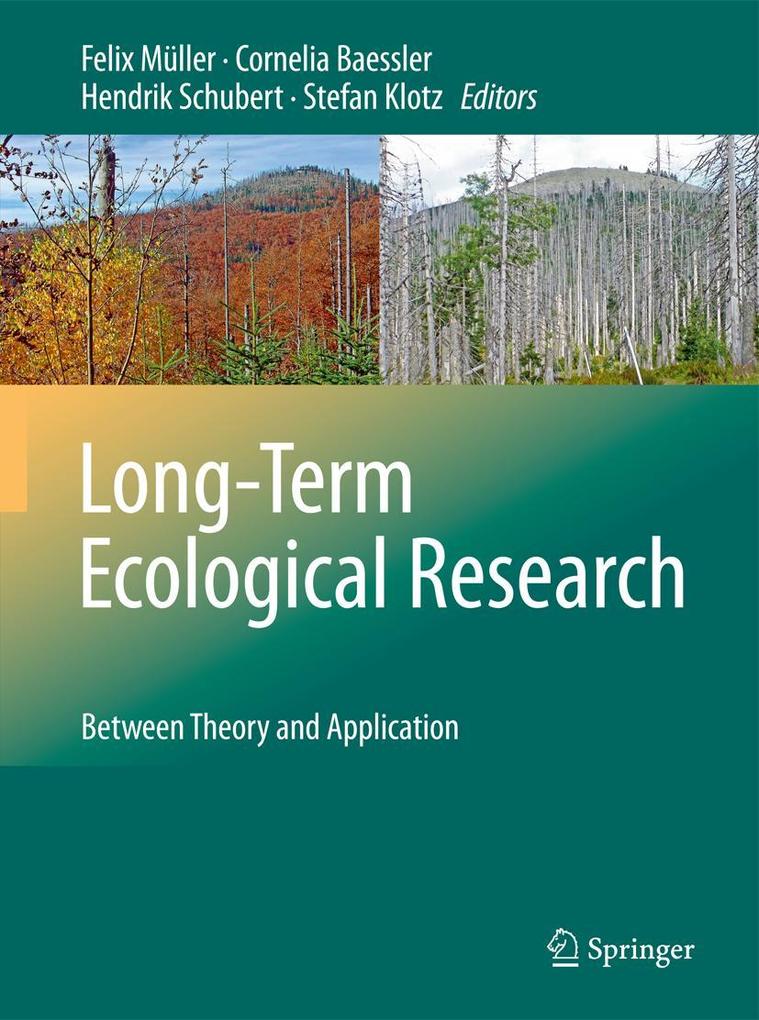
This book focuses on the investigation of complex, long-term ecological processes and global change, the development of early warning systems, the acquisition of a scientific basis for strategic conservation management and the sustainable use of ecosystems.
Ecosystems change on a multitude of spatial and temporal scales. While analyses of ecosystem dynamics in short timespans have received much attention, the impacts of changes in the long term have, to a great extent, been neglected, provoking a lack of information and methodological know-how in this area.
This book fills this gap by focusing on studies dealing with the investigation of complex, long-term ecological processes with regard to global change, the development of early warning systems, and the acquisition of a scientific basis for strategic conservation management and the sustainable use of ecosystems.
Within this book, theoretical ecological questions of long-term processes, as well as an international dimension of long-term monitoring, observations and research are brought together. The outcome is an overview on different aspects of long-term ecological research. Aquatic, as well as terrestrial ecosystems are represented.
Inhaltsverzeichnis
Long-Term Ecosystem Research Between Theory and Application An Introduction. - The Significance of Ecological Long-Term Processes. - Theoretical Demands for Long-Term Ecological Research and the Management of Long-Term Data Sets. - Long-Term Ecosystem Dynamics: Theoretical Concepts of Environmental Change. - The Scientific Potential of Environmental Monitoring. - Exploring Long-Term Processes: International Experience. - Twenty-Eight Years of the US-LTER Program: Experience, Results, and Research Questions. - Introducing the Next Generation of Ecosystem Research in Europe: LTER-Europe s Multi-Functional and Multi-Scale Approach. - The Role of Ecosystem Modelling for Long-Term Ecological Research. - The Role of Statistics for Long-Term Ecological Research. - The Role of Remote Sensing in LTER Projects. - Concepts and Results: Presenting and Interpreting Long-Term Ecological Processes: Aquatic Ecosystem Research. - Long-Term Ecological Change in the Northern Wadden Sea. - Long-Term Model Simulation of Environmental Conditions to Identify Externally Forced Signals in Biological Time Series. - Long-Term Investigations in Brackish Ecosystems. - Long-Term Ecological Research in Freshwater Ecosystems. - Long-Term Monitoring in Rivers of South Germany Since the 1970s Macrophytes as Indicators for the Assessment of Water Quality and Its Implications for the Conservation of Rivers. - Concepts and Results: Presenting and Interpreting Long-Term Ecological Processes: Terrestrial Ecosystem Research. - Long-Term Observations of Soil Mesofauna. - Tracing Biogeochemical Processes in Small Catchments Using Non-linear Methods. - Long-Term Measurements to Quantify the Impact of Arable Management Practices on Deep Seepage and Nitrate Leaching. - Long-Term Ecosystem Research in a Beech Forest ofNorthern Germany. - A Conceptual Framework for Integrated Functional Landscape Monitoring in the Wider Countryside of Central Europe. - Temporal Changes and Spatial Determinants of Plant Species Diversity and Genetic Variation. - Integration of Long-Term Environmental Data by the Example of the UNECE Heavy Metals in Mosses Survey in Germany: Application of a WebGIS-Based Metadata System. - Concepts and Results: Presenting and Interpreting Long-Term Ecological Processes: Linking Research and Applications. - Monitoring of Ecosystems: Two Different Approaches Long-Term Observation Versus Success Control. - National Parks as Model Regions for Interdisciplinary Long-Term Ecological Research: The Bavarian Forest and Šumavá National Parks Underway to Transboundary Ecosystem Research. - Turning Long-Term Monitoring into Policy Using the National Park Schleswig-Holstein Wadden Sea as an Example. - Design and Importance of Multi-tiered Ecological Monitoring Networks. - Future Demands and Challenges. - Conceptualising Long-Term Socio-ecological Research (LTSER): Integrating the Social Dimension. - Integrating Social Sciences into Long-Term Ecological Research. - Ecosystem Manipulation and Restoration on the Basis of Long-Term Conceptions. - Exploratories for Large-Scale and Long-Term Functional Biodiversity Research. - Conclusions. - On the Way to an Integrative Long-Term Ecosystem Research Milestones, Challenges, and some Conclusions.