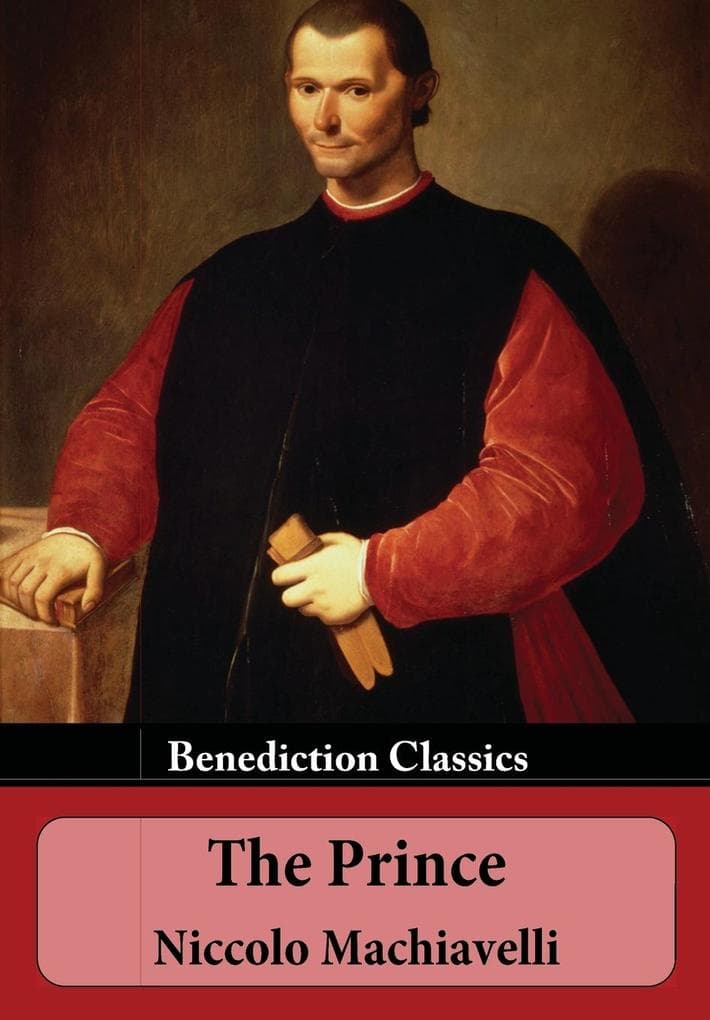
Niccolò Machiavelli's The Prince is one of the most famous and controversial works of political philosophy ever written, offering a direct and unsentimental examination of power and leadership.
Written in the turbulent political climate of Renaissance Italy, Machiavelli's treatise explores how rulers gain authority, maintain control, and secure the stability of their states. Drawing upon examples from ancient history and the political struggles of his own time, he analyzes the qualities that make a successful ruler and the practical realities of governing.
Machiavelli argues that political leadership requires clear judgment, decisive action, and an understanding of human nature. While moral ideals may guide personal conduct, the preservation of the state sometimes demands difficult and pragmatic choices. In examining the balance between virtue, fortune, and necessity, he presents a powerful reflection on the challenges faced by those who wield political authority.
For centuries The Prince has been read, debated, and studied as a foundational work of political thought. Its exploration of power, ambition, and the realities of government continues to influence discussions of leadership, strategy, and statecraft.